मेनू
थेट हवा पकडण्यासाठी मेलामाइन फोम
Lightweight 3D Sorbent Support for Low-Energy Carbon Removal Systems
Direct Air Capture (DAC) technologies are moving beyond sorbent chemistry alone.
As DAC systems scale, engineers must also address how large volumes of ambient air move through the capture structure, how much inactive structural mass must be heated during regeneration, and how effectively the sorbent is distributed throughout the contactor.
SINOYQX™ is exploring open-cell melamine foam as a:
Lightweight 3D Sorbent Support
for next-generation Direct Air Capture systems.
In this concept, melamine foam does not capture CO₂ by itself.
Instead, it serves as a lightweight porous carrier that can potentially support specialized CO₂ sorbents within a three-dimensional open-cell structure.
Why DAC Needs More Than Better Sorbents
Ambient air contains a relatively low concentration of CO₂.
To remove meaningful quantities of carbon dioxide, DAC systems must therefore process very large volumes of air.
This means that system performance depends not only on:
How much CO₂ can the sorbent capture?
but also on:
How efficiently can air reach the sorbent?
If the sorbent structure creates excessive airflow resistance, the system may require higher fan power and greater electrical energy input.
At the same time, if the sorbent is supported on heavy metal, ceramic or other structural materials, these inactive components may also need to be repeatedly heated and cooled during regeneration.
For next-generation DAC systems, the engineering challenge is therefore increasingly becoming:
Sorbent Chemistry + Sorbent Architecture
3D Open-Cell Sorbent Architecture
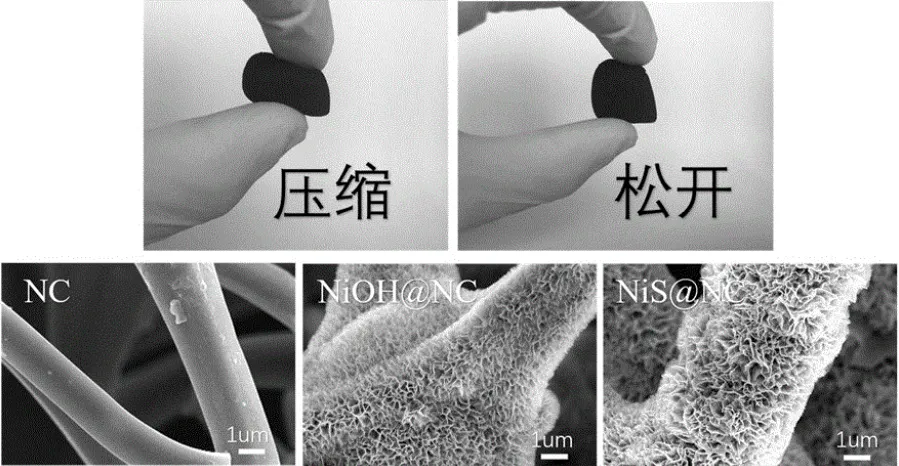
SINOYQX™ मेलामाइन फोम features a continuous three-dimensional open-cell structure.
Unlike a conventional two-dimensional surface, air can move through the internal porous network of the foam.
This creates an opportunity to study sorbent coatings, impregnation and surface-functionalization methods that distribute active capture materials throughout the structure.
A potential configuration could be:
सभोवतालची हवा
↓
3D Open-Cell Melamine Foam
↓
CO₂ Sorbent Distributed on the Foam Skeleton
↓
Gas-Solid Contact
↓
CO₂ Capture by the Active Sorbent
↓
Remaining Air Continues Through the Structure
In this system, the melamine foam acts as:
The active CO₂ capture function remains with the specialized sorbent chemistry.
Potential Benefit 1: Lower Airflow Resistance
Supporting Low-Pressure-Drop DAC Contactor Design
Direct Air Capture requires large-volume air handling.
For this reason, pressure drop is an important system-level engineering parameter.
A highly dense contactor structure may provide a large surface area but can also increase airflow resistance.
The goal is therefore not simply to maximize surface area.
The real engineering objective is to find a balance between:
Effective Gas-Solid Contact
आणि
कमी वायुप्रवाह प्रतिरोध
SINOYQX™ open-cell मेलामाइन फोम is being evaluated as a potential architecture for:
Low-Pressure-Drop Sorbent Support
Future development can focus on:
The key relationship to characterize is:
Air Velocity vs. Pressure Drop
under realistic sorbent-loading conditions.
Potential Benefit 2: Ultra-Low Structural Mass
Reducing Inactive Thermal Load During Regeneration
Many Direct Air Capture processes operate through repeated adsorption and regeneration cycles.
एका सामान्य प्रक्रियेमध्ये खालील गोष्टींचा समावेश असू शकतो:
CO₂ Adsorption
↓
Sorbent Saturation
↓
पुन्हा निर्माण
↓
CO₂ रिलीज
↓
Sorbent Reuse
During thermal regeneration, the energy input does not only heat the sorbent itself.
The support structure and other inactive components may also absorb heat.
हे यामध्ये योगदान देते:
Parasitic Thermal Load
SINOYQX™ standard melamine foam has a typical density of approximately:
8.5 किलो / मी
Its very low structural mass makes it a candidate for evaluation as an:
Ultra-Low-Thermal-Mass Sorbent Support
The potential engineering pathway is:
Lower Support Mass
↓
Lower Inactive Structural Heat Capacity
↓
Less Non-Active Material Repeatedly Heated During Each Cycle
↓
Potentially Lower Regeneration-Related Energy Demand
The final performance metric should not simply be material weight.
The relevant system-level metric is:
Energy Consumption per Ton of CO₂ Captured
Potential Benefit 3: More Active Sorbent per Unit Structural Mass
Traditional planar substrates mainly support active material on an external surface.
A three-dimensional porous scaffold offers the possibility of distributing sorbent throughout an internal network.
This creates an opportunity to explore:
More Active Surface per Unit Structural Mass
संभाव्य फायद्यांमध्ये हे समाविष्ट आहे:
The objective is to use less structural material while supporting more active capture chemistry.
SINOYQX™ DAC Sorbent Support Platform
SINOYQX™ can support joint development of different melamine foam structures for Direct Air Capture research.
Standard Open-Cell Grade
Suitable for early-stage evaluation involving:
This grade can be used as a baseline material for proof-of-concept experiments.
Low Pressure Drop Grade
Designed for further optimization of:
संभाव्य संशोधन क्षेत्रांमध्ये खालील बाबींचा समावेश आहे:
हायड्रोफोबिक ग्रेड
Suitable for evaluating DAC operation under:
This grade can help researchers study how moisture influences:
Reinforced Grade
Developed for projects requiring improved:
This option is more suitable for prototype contactors and repeated-cycling studies.
Joint Development Model
SINOYQX™ does not position melamine foam as the CO₂ sorbent itself.
Our role is focused on:
3D Open-Cell Architecture
A suitable cooperation model is therefore:
Sorbent Developer
Provides expertise in:
SINOYQX™
Provides expertise in:
Together, the system becomes:
Sorbent Chemistry + Porous Architecture
Key Performance Parameters to Validate
This application should currently be treated as a:
Joint Development Concept
rather than a fully validated commercial DAC product.
The following parameters should be evaluated together with the sorbent developer.
Sorbent Loading
Determine how much active sorbent can be retained per:
while maintaining acceptable airflow and mechanical stability.
CO₂ Uptake
Evaluate both:
CO₂ / Sorbent Mass
आणि
CO₂ / Module Volume
to understand both material-level and module-level performance.
दबाव ड्रॉप
Establish performance curves across different:
The goal is to generate:
Air Velocity vs. Pressure Drop
data for contactor design.
Sorption Kinetics
मूल्यांकन करा:
थर्मल मास
Compare different support architectures under equivalent CO₂ capture capacity.
मुख्य प्रश्न हा आहे:
How much inactive material must be heated and cooled during each regeneration cycle?
सायकलिंग स्थिरता
Long-term cycling should evaluate:
आर्द्रता स्थिरता
Evaluate performance under different relative-humidity conditions, including changes in:
Additional Application: Thermal Insulation in DAC Systems
Melamine foam may also be evaluated for a second, more conventional role within DAC infrastructure.
Potential insulation locations include:
By reducing unnecessary heat loss, thermal insulation can support lower heating demand within DAC equipment.
This application is separate from the sorbent-support concept and is closer to established industrial insulation use cases.
From Lightweight Materials to Lower Parasitic Energy
SINOYQX™ does not claim that melamine foam directly captures CO₂.
The potential carbon-reduction pathway is based on system engineering:
साहित्य पातळी
Ultra-lightweight 3D open-cell material
↓
घटक पातळी
Lightweight sorbent support
↓
Process Level
Potentially lower airflow resistance
Lower structural thermal mass
Reduced inactive support weight
↓
सिस्टम लेव्हल
Lower parasitic airflow and thermal energy demand
↓
Carbon Removal Level
Potential reduction in the energy required per ton of CO₂ captured
उद्देश सोपा आहे:
Helping Sorbents Work More Efficiently.
Why Work With SINOYQX™
SINOYQX™ can support Direct Air Capture material-development programs with:
For each sorbent chemistry, the optimal combination of:
Pore Structure × Sorbent Loading × Airflow × Regeneration Conditions
should be determined through testing.
Develop the Next Generation of DAC Contactors With SINOYQX™
Are you developing:
and looking for a:
Lightweight, open-cell and customizable 3D sorbent support?
SINOYQX™ can provide melamine foam samples for evaluation in:
Start a Joint Development Project
Sorbent Chemistry + 3D Porous Architecture
for the next generation of low-energy carbon removal systems.
Contact SINOYQX™ →